

What happened in completed 00:00–09:00 UTC intervals
00:00–03:00 UTC: the primary NOAA forecast JSON records observed Kp 1.67.
03:00–06:00 UTC: it records observed Kp 2.33, below the article’s original selected Kp 3.33 forecast for that exact slot.
06:00–09:00 UTC: it records observed Kp 3.33, above the original Kp 2.67 forecast for that slot. Kp 3.33 is the maximum within completed 00:00–09:00 UTC only; this is global planetary Kp, not a city-visibility report.
City forecast
| City | Forecast window |
|---|---|
| Churchill | Oct. 11, 22:00–Oct. 12, 01:00 CDT — Kp 3.33 |
| Hay River | Oct. 11, 21:00–Oct. 12, 00:00 MDT — Kp 3.33 |
| Iqaluit | Oct. 11, 23:00–Oct. 12, 02:00 EDT — Kp 3.33 |
| Fort St. John | Oct. 11, 20:00–23:00 MST — Kp 3.33 |
| Edmonton | Oct. 12, 00:00–03:00 MDT — Kp 2.67 |
| Portage la Prairie | Oct. 11, 22:00–Oct. 12, 01:00 CDT — Kp 3.33 |
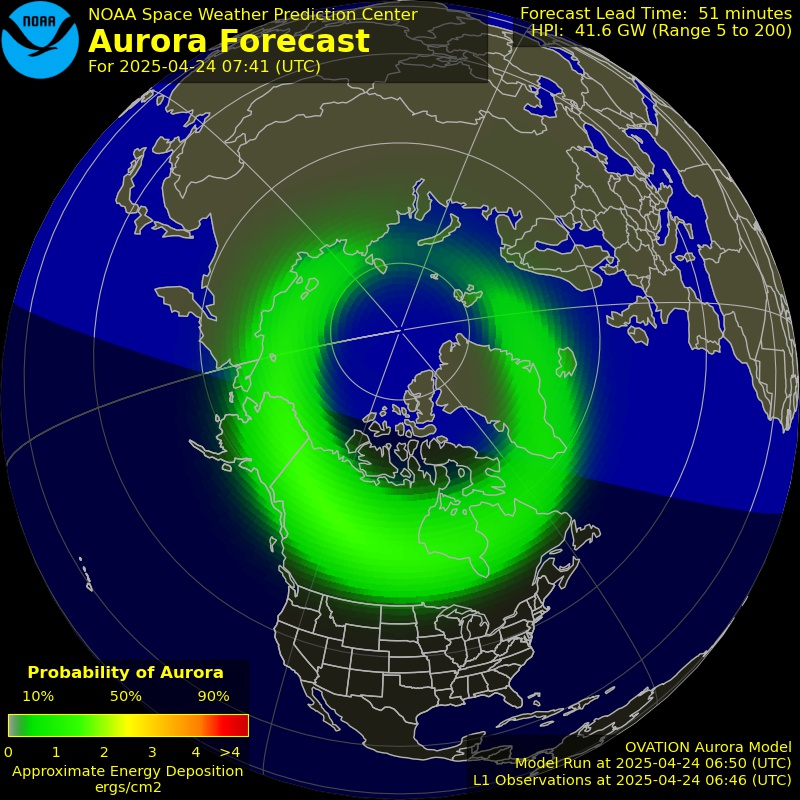
Selected local-night outlook
Observed values for completed intervals were Kp 1.67 at 00:00–03:00 UTC, Kp 2.33 at 03:00–06:00 UTC and Kp 3.33 at 06:00–09:00 UTC.
The Kp 3.33 selected forecast at 03:00–06:00 UTC is historical. The city cards retain its original local times and values.
What to do
- Check the live city forecast before leaving.
- Check the local three-hour window, darkness and clouds.
- Use the NOAA outlook as a planning signal, not a visibility guarantee.
Sources and live checks
NOAA’s planetary K-index forecast was checked on October 11, 2026 at 19:18 UTC. The primary NOAA forecast JSON was checked again on October 12 at 09:00 UTC: completed records show Kp 1.67 at 00:00–03:00, 2.33 at 03:00–06:00 and 3.33 at 06:00–09:00 UTC.